Books



Author
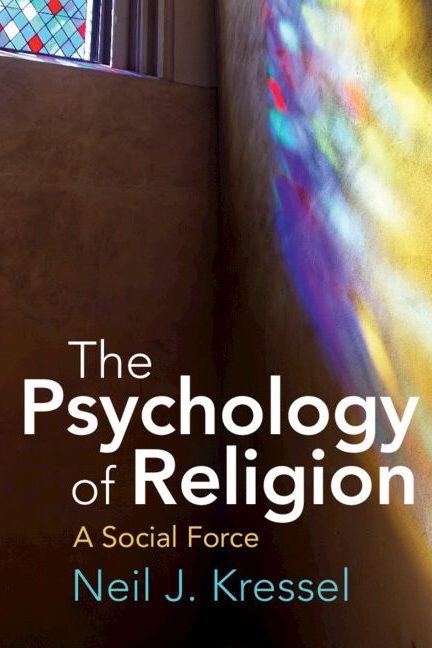
- The Psychology of Religion: A Social Force (2024)
- Bad Faith: The Danger of Religious Extremism (2007)
- Stack and Say: The New Science of Jury Consulting (2001)
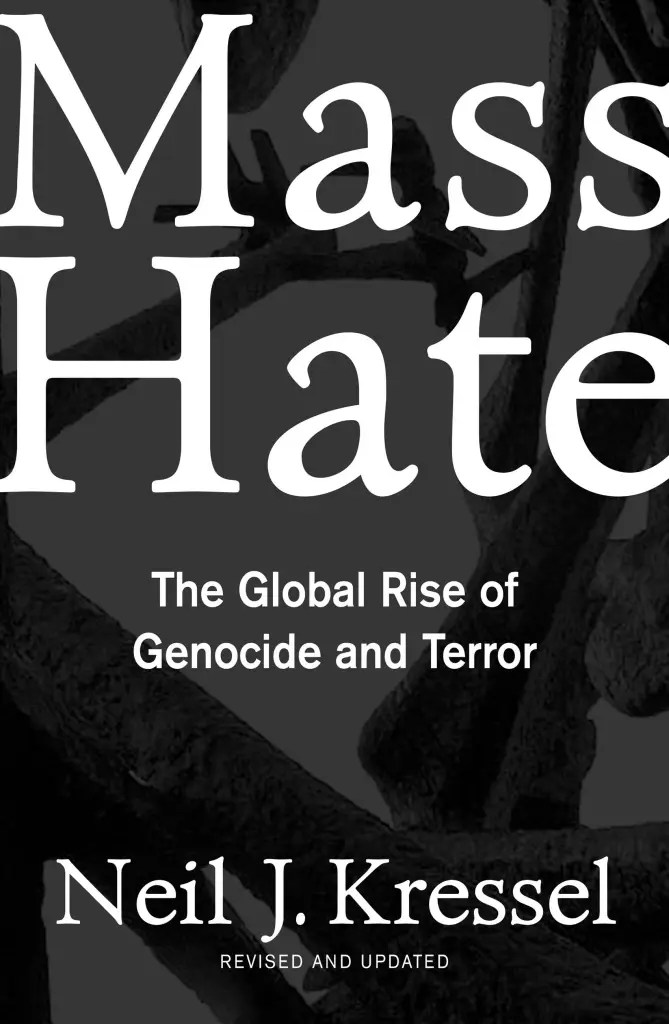
- Mass Hate: The Global Rise of Genocide and Terror (1996, 2002)
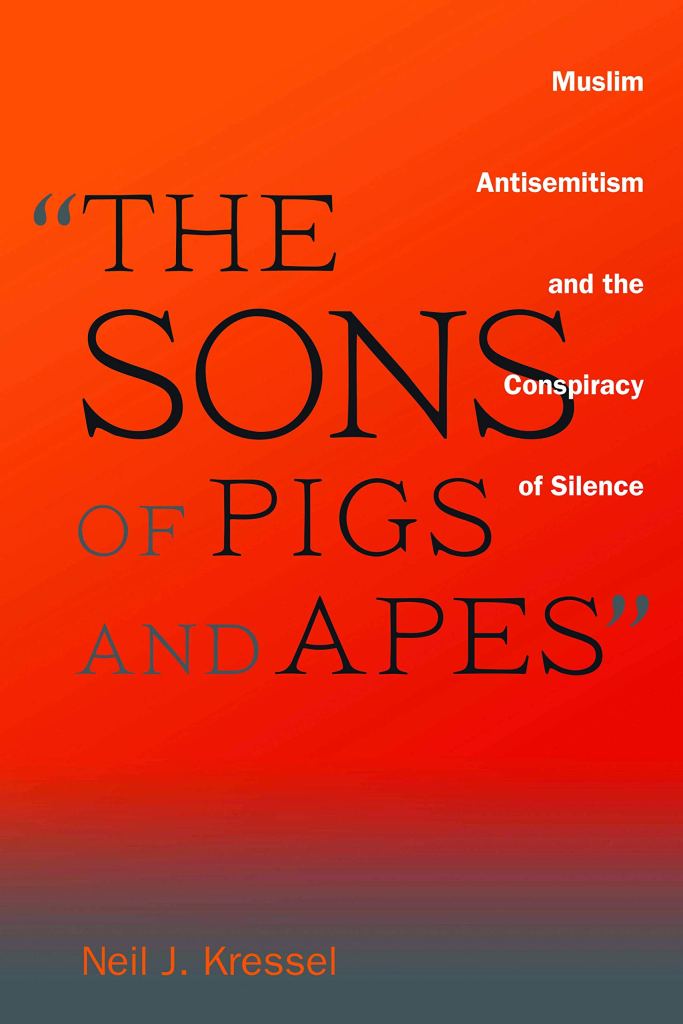
- “The Sons of Pigs and Apes”: Antisemitism and the Conspiracy of Silence (2012)
Editor
- Antisemitism in North America: New World, Old Hate (2016)
- Political Psychology: Classic and Contemporary Readings (1993)
Jump to
ARTICLES | BOOK CHAPTERS
New Book
from Cambridge University Press

The Psychology of Religion: A Social Force is a textbook for undergraduate and graduate students with online resources.
Articles
SELECTED
Antisemitism in 2025: Problems on Campus and the Mental Health Response
Frontiers in Mental Health, 1: (February 2025) no. 1, 26-30. (With Brandy Shufutinsky)
Trends in the Psychological Study of Contemporary Antisemitism: Conceptual Issues and Empirical Evidence
Basic and Applied Social Psychology, 38: (2016), no. 2, 111-126. (With Samuel W. Kressel) | Read
Abstract
This article reviews evidence bearing on whether antisemitism has recently reemerged as a dangerous and global sociopolitical problem. Two empirical studies then explore how psychologists and other social scientists have investigated anti–Jewish bigotry. The first looks at research trends in major social scientific databases since the 1940s. The second is a content analysis of abstracts of psychological studies on antisemitism since 1990. The article concludes, among other findings, that while social scientific aspects of the Holocaust have been studied in some detail, contemporary anti-Jewish hostility has been underestimated, and antisemitism from the Muslim/Arab world has been largely ignored.
The Urgent Need to Study Islamic Anti-Semitism
The Chronicle of Higher Education: The Chronicle Review, March 12, 2024 | Read
Participation in Mass Atrocities: A Social Psychological Perspective
The Journal of Psychohistory, 27 (1999), no. 2, 165-179 | Read
Presented as the Distinguished Lecture at the 22nd Annual International Psychohistorical Association Convention, delivered at Fordham University on 2 June 1999
Multiculturalism and the Jews
Midstream, 38 (1992), no. 9, 26-29
Job and degree satisfaction among social science graduates
Teaching of Psychology, 17: (1990), no, 4, 222-227 | Read
Abstract
Social science alumni (N = 307) responded to a mailed survey investigating correlates of job and degree satisfaction. Three variables—job relatedness to major, income satisfaction, and highest degree—predicted 35% of the variance in scores on a 5-item index of global job satisfaction. Five variables influenced satisfaction with the undergraduate major: job relatedness to major, undergraduate course difficulty, highest degree, undergraduate course enjoyment, and income satisfaction. Implications of these findings for student advisement, curricular planning, and alumni survey design are discussed.
Systemic barriers to progress in academic social psychology
Journal of Social Psychology, 30 (1990), no. 1, 5-27
Abstract
Many social psychologists have expressed general dissatisfaction with the style, focus, originality, and caliber of much research within the discipline. But the emergence during the past two decades of a large critical literature has not resulted in a significant metamorphosis of the field. One source of failed reform is intellectual disagreement; however, many forces involved in maintaining the status quo are nonintellectual. An understanding of knowledge production in academic social psychology needs to include at least three categories of nonintellectual influence on the research act: (a) broad extradisciplinary forces such as Zeitgeist, social movements, and prevalent political ideologies of professors; (b) student selection and socialization processes; and (c) systemic survival demands. Any recommendations for reform should consider the impact of these nonintellectual factors.
Biased judgments of media bias: A case study of the Arab-Israeli conflict
Political Psychology, 8: (1987), 211-227 | Read
Abstract
Since the birth of the Jewish state in 1948, hundreds of commentaries on media coverage of the Arab-Israeli conflict have been driven by a desire to demonstrate unfair media bias-either against Israel or against the Arab states. This paper presents a brief overview of these articles; it differs from prior literature reviews inasmuch as it focuses upon the charges of partisan critics. The paper’s goals are (1) to review, categorize, and evaluate these accusations, (2) to distinguish between the normative, conceptual, and empirical issues involved in judgments of media bias, and (3) to suggest an overall vantage point from which we may most usefully view the debate over media unfairness with regard to the Arab-Israeli conflict. Among other things, the paper argues that: 1. The media ought not rely upon “evenhandedness,” “balanced content,” or “middle-of-the-road politics” as guidelines for coverage of the conflict. 2. “Scientific,” content analytic studies of media bias have obscured the centrality of values and political orientations in judgments of unfair coverage. 3. While the media do have an obligation to adhere to certain journalistic norms and standards, it is difficult-if not impossible-to invoke these norms without making normative and conceptual judgments. 4. Structural constraints predispose the mass media toward certain types of coverage. Sometimes, limitations in media capabilities produce coverage favorable to Israel and sometimes they produce coverage favorable to the Arabs. 5. Judgments of media bias rest upon three social psychological processes: a general, cognitive confirmatory bias in judging evidence, a tendency for deeply involved partisans to have a wide latitude of rejection, and a tendency for partisans to perceive (and misperceive) media stimuli in accordance with their overall views. 6. Media criticism may also be understood as a partisan, political tool.
SYMLOG and behavior therapy: Pathway to expanding horizons
Small Group Behavior, 18: (1987), no. 3, 420-436 | Read
Abstract
During the past 15 years, several prominent behavior therapists have urged practitioners to incorporate useful elements of other therapeutic approaches into their own clinical repertoires. A recently developed sociological method for group study called SYMLOG is suggested as a means for bringing elements of psychoanalytic and humanistic techniques into behavior therapy. Numerous applications of SYMLOG are discussed. The new social psychological system is useful for both individual behavior therapy and behavior therapy in groups. In addition, SYMLOG may be used to facilitate social psychological comparisons between the methodologies of various orientations to therapy.
Book Chapters
How Antisemitism Differs from Other Forms of Bigotry: Evidence from History and Social Psychology
in Julie Ancis, ed., Antisemitism: Psychological Perspectives. Wiley, in press, expected fall 2025
The Psychology of Contemporary Antisemitism
in Handbook of Prejudice, Stereotyping, and Discrimination (3rd edition), pp. 327-365, ed. Todd Nelson. New York: Routledge, January 2025
Does Islam Fuel Antisemitism?
in Confronting Antisemitism from Perspectives of Philosophy and Social Sciences, eds. Armin Lange, Kerstin Mayerhofer, Dina Porat and Lawrence H. Schiffman (pp. 263-281). Boston: De Gruyter, 2022
Why So Many Social Scientists Misunderstand Contemporary Antisemitism
in Poisoning the Wells: Antisemitism in Contemporary American Culture, Politics, and Education, eds. Corinne Blackmer & Andrew Pessin (pp. 111-127). New York: ISGAP, 2021
The Great Failure of the Antiracist Community: How and Why Muslim Antisemitism Has Been Neglected in English-Language Textbooks, Research, and the Classroom
in From Antisemitism to Anti-Zionism; Past and Present of a Lethal Ideology, ed. Eunice G. Pollock (pp. 29-68). Boston: Academic Studies Press, 2017
How to Interpret American Poll Data on Jews, Israel and Antisemitism
in North American Antisemitism: New World, Old Hate, eds. Steven K. Baum, Neil Kressel, Florette Cohen, and Steven L Jacobs (pp. 3-32). Boston: Brill, 2016
Why Well-Intentioned Westerners Fail to Grasp the Dangers Associated with Islamic Antisemitism: Some Arguments Considered
in The Yale Papers: Antisemitism in Comparative Perspective, ed. Charles A. Small (299-327). New York: ISGAP, 2015
What is the Relationship between Religion and Extremist Acts?
in Extremism: Opposing Viewpoints, ed. Laurie Willis (pp. 20-28). New York: Gale Cengage, 2011). Reprinted excerpt from Bad Faith: The Danger of Religious Extremism
 Neil J. Kressel